
A cutting die is a precision-engineered tool built to cut raw materials into exact, repeatable shapes. Typically manufactured from hardened steels or other durable alloys, cutting dies are designed to hold sharp edges and withstand the pressures of industrial use. On their own, dies are passive tools, but when paired with a die cutting machine that supplies force, they become the foundation of a process known as die cutting.
In manufacturing, this system, tool, machine, and process, delivers more than just accurate cuts. It enables high-volume production, consistent part quality, and efficient material use across industries ranging from automotive and packaging to aerospace and consumer goods.
Cutting Die vs Die Cutting Machine vs Die Cutting
Although sometimes used interchangeably, these three terms represent distinct parts of the same production process:
Cutting Die – The tool itself. Dies are custom-shaped, sharpened, and engineered to cut specific materials to exact tolerances. There are a wide variety of cutting dies to choose from based on your production needs.
Die Cutting Machine – The press or machine that drives the die into the substrate with the force needed for a clean, uniform cut.
Die Cutting – The process of combining the die and the machine to stamp, cut, or shape material into precise designs.
Together, these components work in synergy. The die defines the shape, the machine provides the pressure, and the process ensures repeatability, all essential for meeting strict manufacturing specifications.
Understanding Cutting Dies
In die manufacturing, cutting dies are typically crafted from durable materials such as tool steel, carbon steel, or stainless steel. The choice of material directly influences the die’s longevity, the types of substrates it can cut, and the press requirements for operation. From thin films and paper to dense composites or metals, dies can be engineered to handle a wide spectrum of applications.
Because each die design affects cut quality and production speed, selecting the right type of cutting die is critical. Manufacturers evaluating their options must consider not only the shape being produced, but also the material being processed and the press being used. This foundational understanding makes it easier to choose the correct die for your application and sets the stage for exploring the different types of dies available.
Common Types of Cutting Dies
The following is a list of the four most common cutting dies utilized in modern manufacturing. Each engineered for specific materials, tolerances, and production demands. These die types represent the core tools that enable everything from high-volume packaging runs to precision automotive components.

01. Steel Rule Dies
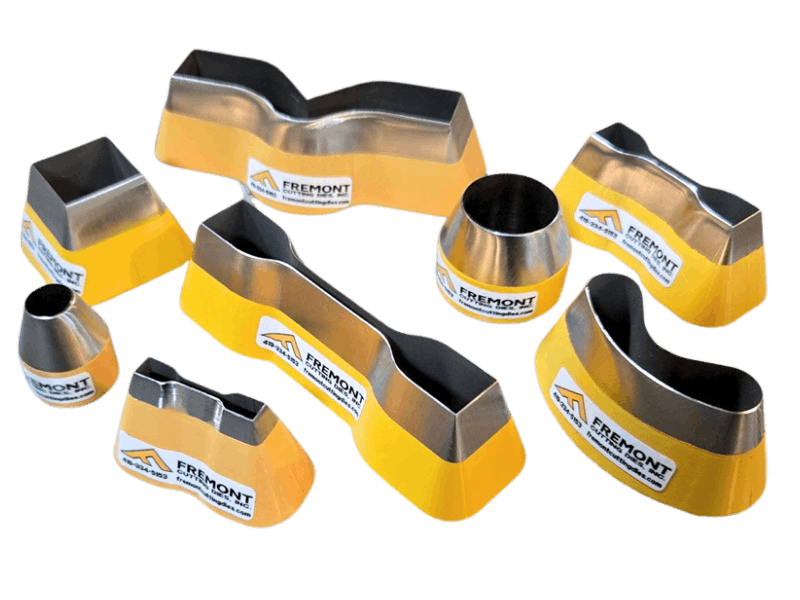
Steel rule dies are constructed using a pre-hard / pre-sharp steel rule die blade. Steel rule die tolerance is typically 0.010″(.25mm) – 0.060″(1.52mm) but is dependent upon cutting rule selection and the shape of the part being produced.

02. Forged Dies
Forged dies are constructed using special forged rule, 4140, S7, and stainless steel. Tolerances of 0.015″ (.38mm) – 0.005″ (.125mm) can be achieved when machining is introduced.

03. Specimen Dies
Specimen dies include but are not limited to ASTM, ISO, JIS, and DIN. Custom Specimen Dies can also be made for specific needs.
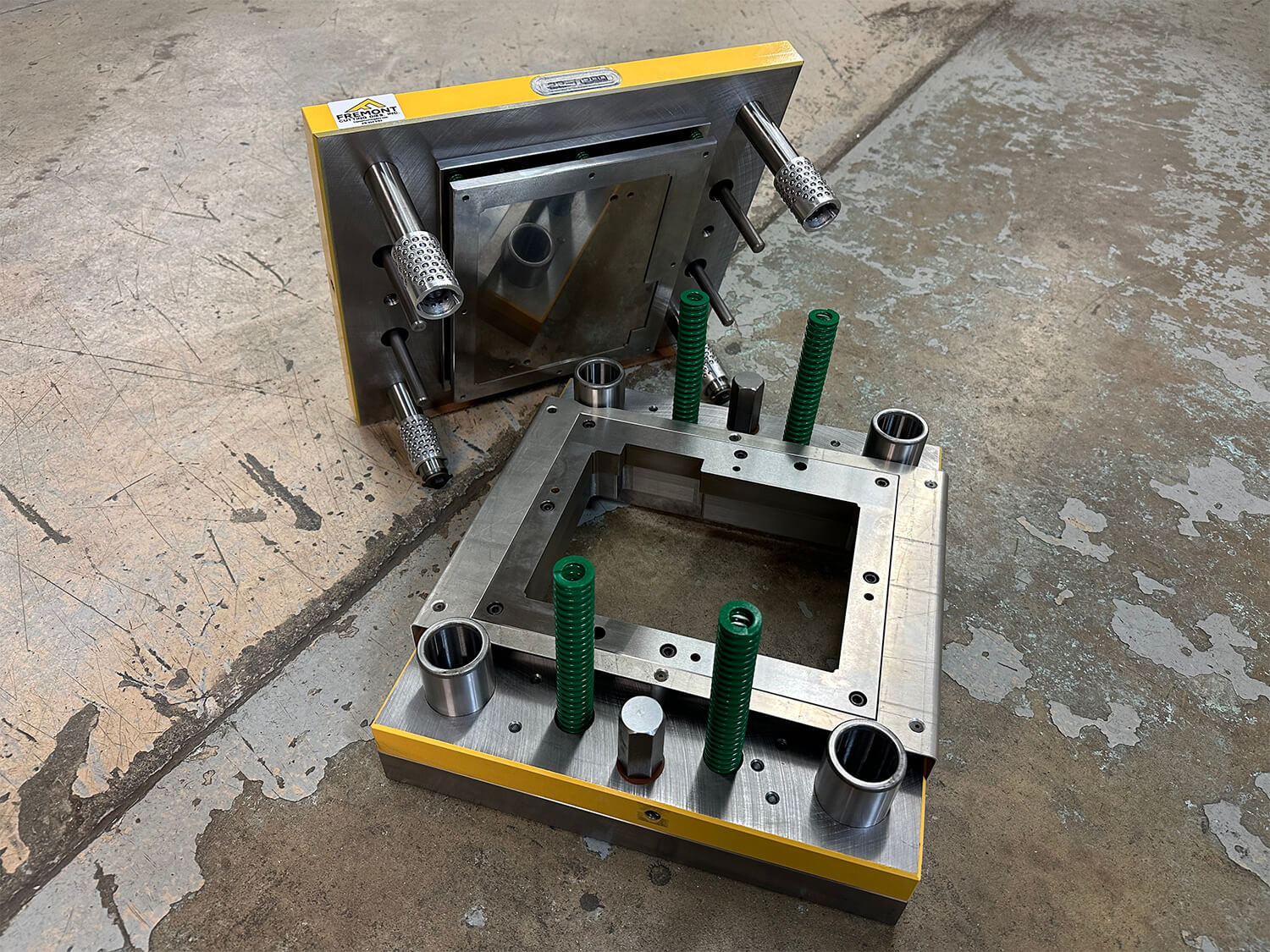
04. Matched-Metal Dies
Also known as “punch and die,” “male/female,” or “by-pass” dies, matched-metal dies are constructed using a solid S7, A2, or D2 with tolerances up to 0.001″ (0.025mm).
Each type of cutting die has its place, and in the next section we’ll discuss how selecting the right one comes down to material, design complexity, and your specific production demands.
Choosing the Right Die for Your Process
Selecting a cutting die is a critical decision that directly affects efficiency, precision, and cost. To make the best possible decision, you should consider the following factors in their order of importance in your process:
Material Compatibility
- Paper & Cardboard → Steel Rule Dies
- Rubber & Soft Plastics → Forged or Compound Dies
- Metals & Composites → Matched-Metal Dies
Production Volume
- Low-Volume Runs → Manual or Semi-Automatic Machines with Standard Dies
- High-Volume Runs → Fully Automated Machines with Heavy-Duty Dies
Tolerance Requirements
- Tight Tolerances (e.g., gaskets, electronic components) → Matched-Metal or Custom Dies
- Looser Tolerances (e.g., packaging inserts) → Steel Rule Dies
Design Complexity
- Multi-Layered or Intricate Shapes → Compound Dies or Custom Dies
- Simple, Repetitive Shapes → Steel Rule or Forged Dies
Process Alignment
- Ensure die type, material, and machine are matched. For example, cutting thick composites with a steel rule die on a manual press can cause uneven cuts and increased wear.
Exploring Die Cutting Presses
Without the right press, even the most precisely engineered cutting die can’t deliver consistent results. In manufacturing, presses vary in size, configuration, and method of force delivery, each designed to meet different production demands. Broadly, they fall into three main categories:
Manual Presses: Are operated by hand. Requiring the operator to perform the pressing action. This is commonly utilized where volumes are low or precision work is needed in small batches.
Semi-Automatic Presses: Combine human oversight with the power of automation. While the machine does the work, the operator is still required to feed material and retrieve parts after the cut. A common choice for mid-volume production runs.
Fully Automated Presses: Built for speed, scale, and integration with production lines. These machines handle continuous runs autonomously with minimal operator input.
Regardless of category, every die cutting press serves the same purpose: transform a die and raw material into a finished, repeatable part. The choice is less about the press itself and more about matching its capabilities to the demands of the job.
Applications Across Industries
A wide range of industries utilize die cutting to support their individual needs, and in each case, the cutting die is central to achieving consistent, high-quality results. By enabling materials to be shaped with precision and repeatability, dies form the backbone of countless production processes in:
Packaging: From folding cartons and corrugated boxes to protective inserts, cutting dies make it possible to mass-produce packaging that is both functional and visually appealing.
Automotive: Gaskets, seals, interior trim, and insulation components are cut to exact specifications, ensuring safety, reliability, and proper fit.
Aerospace: Matched metal dies produce lightweight yet durable components for aircraft systems, where precision and material integrity are critical.
Electronics: Cutting dies enable the production of insulating films, adhesive layers, labels, and intricate components for devices.
Textiles: Upholstery panels, industrial fabrics, and specialty materials are cut uniformly, streamlining production and reducing material waste.
Medical: Die cutting plays a vital role in producing sterile, single-use products such as diagnostic test strips, wound care dressings, and medical-grade adhesives.
Food: Cutting dies create packaging, labeling, and even specialty shapes for a variety of consumable goods.
Consumer Goods: From greeting cards and stationery to toys and household items, die cutting makes it possible to produce products with unique designs, high consistency, and mass-market scalability.
Shop Cutting Dies
Fremont Cutting Dies produces all the cutting dies your business needs, delivered right to you.
Shop our selection of on-demand ASTM Dies, ISO Dies, Die Molds, Presses, Accessories, and more.
Maintenance & Best Practices
Cutting dies and die cutting machines perform best when properly cared for. Neglect can lead to misaligned cuts, increased scrap, and downtime, while proactive maintenance keeps production consistent and efficient. Below is a list of common issues you may experience and quick tips to fix them. If your issues persist, reach out and we’d be happy to assist with your maintenance needs.
Common Issues & Tips:
-
- Dull or Worn Edges: Inspect dies on a regular basis; have them sharpened or replace cutting blades as needed.
- Misalignment: Check your setups and guides to ensure they are functioning properly. You may need to calibrate your system to ensure precise cuts.
- Material Variations: Look at adjusting press pressure and speed based on thickness or density of your materials. Your cutting edge could also be dulling.
- Storage/Handling: To preserve your die, store them safely not on their cutting edge. When they need to be moved, handle with care and avoid contact with important surfaces to avoid damage.
- Machine Upkeep: Every machine and press is slightly different, but they all have maintenance schedules. Follow them for proper lubrication, calibration, and inspections.
Proper maintenance of your dies and machines will improve output quality, reduce waste, and extend the life of both your dies and machines.
The Impact of Precision Tools
Cutting dies may seem like simple tools, but they are at the heart of modern manufacturing. Whether you’re producing packaging, automotive components, or precision electronics, the right die, paired with the right press, ensures your process runs efficiently, consistently, and profitably. Understanding the different types of dies, machines, and applications is the first step toward making informed decisions that keep your production line moving.
At Fremont Cutting Dies, we’ve built our reputation on delivering high-quality dies backed by technical expertise and responsive support. If your operation depends on precision cutting, or if you’re exploring ways to improve efficiency and product quality, our team is here to help. Request a quote today to discuss your project and discover how the right die solution can make all the difference.
