
Steel rule dies are essential tools utilized in almost every industry for precision cutting of various materials. Whether you’re in automotive, heavy truck, packaging or pharmaceuticals, understanding steel rule dies can help you streamline production and improve efficiency. This guide introduces steel rule dies, including their construction, materials they cut, and when to use them.
What is a Steel Rule Die?
A steel rule die is a cutting tool consisting of a base, usually made from plywood, with sharp steel blades inserted into it. These dies function like a cookie cutter, stamping out precise shapes from a wide variety of materials. Manufacturers often use steel rule dies for high-precision repeatable cutting.
Steel rule dies are affordable, easy to manufacture, and efficient in cutting soft to semi-rigid materials. They are ideal for applications requiring detailed cuts, customized shapes, and cost-effective production. Their versatility makes them a go-to solution for businesses looking for high yield production runs.
How are Steel Rule Dies Made?
Die makers carefully design and manufacture steel rule dies to meet specific cutting requirements. Their construction requires precision engineering to ensure durability and accuracy. The process involves several key steps that transform raw materials into highly efficient cutting tools.
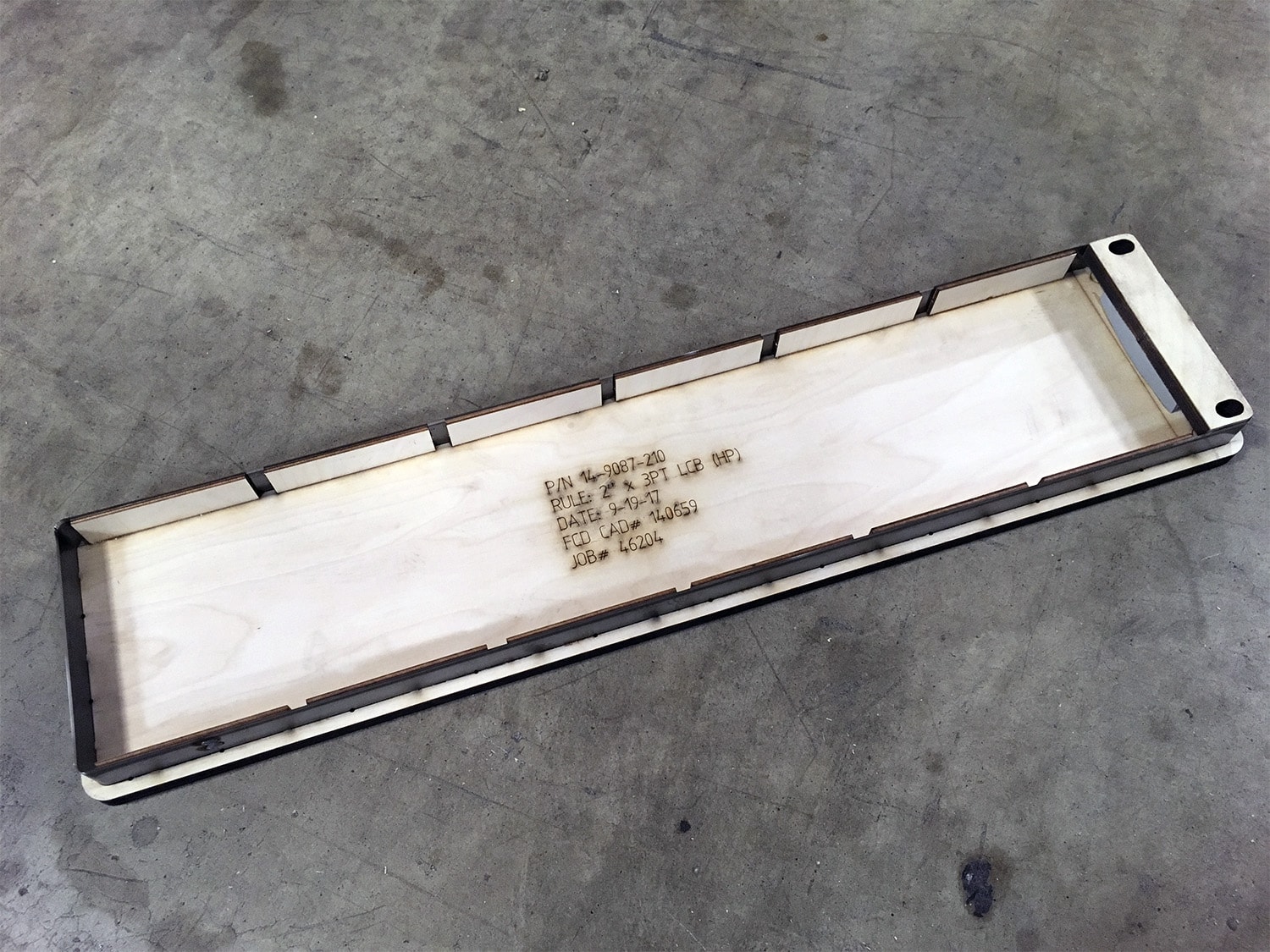
Components of a Steel Rule Die
Die Board
The foundation that holds the steel rule in place, typically made of plywood, acrylic, or composite materials. The board’s quality directly affects the durability of the die.
Steel Rule
The sharpened blade that does the cutting, available in different bevels and thicknesses. Steel rules come in variations such as center bevel, side bevel, and long bevel and serrated, to name a few, to suit different cutting needs.
Bridges
An integral part of the die, the bridge is an interruption of cut in the board to allow the board to stay together.
Ejection Rubber
Foam or rubber that assists in releasing the cut material from the die. Different ejection rubbers provide varying levels of pressure and resilience.
Punches
Whether round, square or of an irregular shape. Punches are utilized when shapes are too intricate to be bent from steel rule.
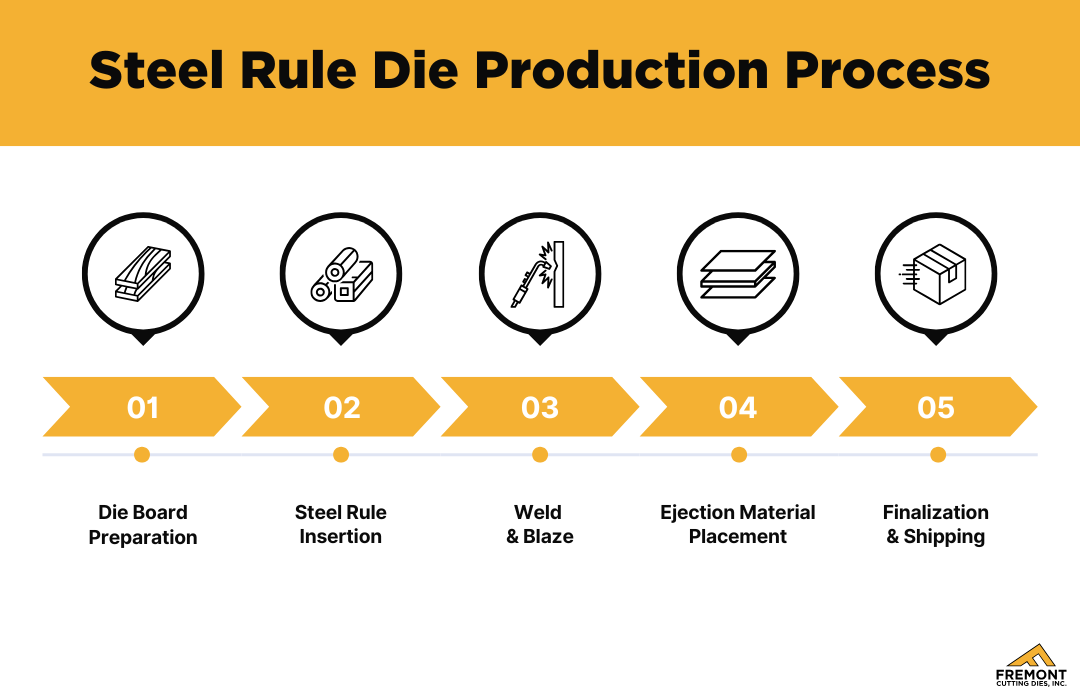
The Production Process
Step 01: Die Board Preparation
It all starts with a sturdy base. Typically cut from plywood, acrylic, or composite material, it holds the steel rule in place. This board is often laser-cut to ensure precision and accommodate intricate designs.
Step 02: Steel Rule Insertion
Sharp, hardened steel blades are bent and inserted into pre-cut slots in the die board. These blades can be various heights and edge profiles depending on the material you need to cut. You can also adjust the rule’s hardness and thickness for durability needs.
Step 03: Weld & Braze
Weld is used to hold joints and intersecting steel rule from separating. Braze is used to fill the joints gap when cutting fibrous materials.
Step 04: Ejection Material Placement
Some dies utilize foam or rubber around the blades to help eject cut pieces smoothly and prevent material from sticking. You can use different ejection materials, such as open or closed materials, depending on the application.
Step 05: Finalization & Shipping
At last the die goes through final tweaks including testing if needed and any adjustments. If the die meets its tolerance requirements it is packed up securely and shipped off to the customer.
Types of Steel Rule Dies
Flatbed Dies
Used for precision cutting of larger materials. Ideal for sheet-fed processes and packaging applications.
Rotary Dies
Designed for high-speed applications in label-making and packaging. These dies work in conjunction with rotating cylinders for continuous cutting.
Materials That Steel Rule Dies Can Cut
Paper & Cardboard: Ideal for packaging, labels, and promotional materials.
Foam & Rubber: Used for gaskets, seals, and insulation in industrial settings.
Leather & Textiles: Common in footwear, clothing, and upholstery manufacturing.
Plastics & Films: Suitable for electronics, medical packaging, and signage.
Thin Metals: Aluminum, copper, and brass sheets can be die-cut with the right setup, though heavier metals may require alternative methods.
Gaskets & Insulation Materials: Used in automotive and industrial applications where precision sealing is needed.
Cork & Felt: Often used for specialty applications requiring softer materials.
Wood Veneers & Laminate Sheets: Utilized in furniture manufacturing and interior design.
When to Use Steel Rule Dies (And Not To)
Steel rule dies are a great option for:
However, they may not be the best choice when:
Addressing Common Pain Points
Many businesses struggle with inefficient cutting processes, high production costs, and material waste. Steel rule dies can help with these issues by:
Reducing Waste
Precision cutting minimizes material loss and optimizes sheet usage.
Speeding Up Production
High-speed die-cutting processes allow for rapid turnaround times.
Lowering Costs
Compared to laser or CNC cutting methods, steel rule dies offer a more budget-friendly solution.
Ensuring Reliability
Durable and long-lasting dies provide consistent performance for repeated production runs.
Customization & Flexibility
Easily adaptable to various industries, including packaging, automotive, and textiles.
Ease of Maintenance
Steel rule dies can often be repaired or modified, extending their lifespan.
Choosing the Right Steel Rule Die
Choosing the right steel rule die requires evaluating several key factors that impact performance and durability. By understanding these elements, your die-cutting process will remain efficient, cost-effective, and meet your production needs.
Material Type
Consider the thickness and rigidity of the material being cut.
Production Volume
Low to Medium volume production may require reinforced dies for longevity.
Precision Requirements
More detailed cuts may need specialized rule profiles.
Budget Constraints
Steel rule dies are cost-effective but may require maintenance over time.
Complexity of Design
Some intricate cuts may require specialized rule configurations.
Die Life Expectancy
Choosing the right steel grade and ejection system can affect how long the die lasts.
Final Thoughts
Steel rule dies are a valuable asset for manufacturers looking to enhance efficiency and precision in their production lines. Whether you need custom die-cut components for packaging, automotive parts, or industrial applications, steel rule dies offer a reliable and cost-effective solution. With the right design and materials, these dies can significantly improve production speed, reduce waste, and increase cost savings.
Looking for high-quality steel rule dies? Contact us today to discuss your specific requirements and find the perfect die-cutting solution for your business!
