
In material testing, consistency and accuracy are everything. When analyzing the strength of various materials, the dog bone tensile test has become the industry standard. But what makes this oddly shaped specimen so important? And how do you ensure your tests produce valid, reliable data? In this article, we’ll explore what the dog bone tensile test is, why people use it, and how to choose the right die.
What Is a Dog Bone Tensile Test?
The dog bone tensile test is a method used to determine how a material reacts under tension. By pulling a standardized specimen until it breaks, engineers and quality control teams can analyze key mechanical properties. The most important being ultimate tensile strength, elongation, and yield point.
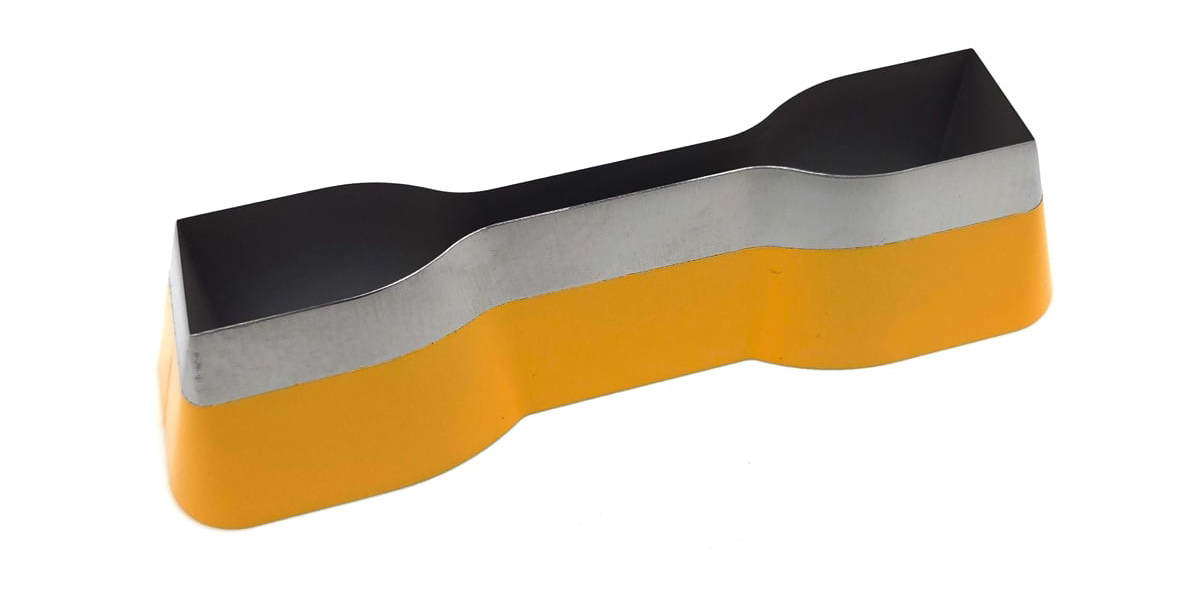
Researchers often call the specimen used in this test a “dog bone” because of its shape. It features a narrow middle (gauge section) and wider ends to fit securely into testing grips. This shape ensures accurate and repeatable data over all tests. The test typically conforms to standards such as ASTM D638 for plastics and ASTM D412 for rubber and elastomers.
Why Use the Dog Bone Shape?
Why not just test with a simple rectangular strip? Well, the dog bone shape provides a couple benefits. The narrow center focuses stress, ensuring failure occurs there. The wide ends allow for better grip by the machine. This avoids skewed data caused by slippage or grip-induced stress concentrations.
A wide variety of industries trust the dog bone tensile test. Its shape and reliable performance make it a standard choice. It provides engineers with comparable data between batches, materials, or suppliers. Making it essential for quality assurance and research and development alike.
Who Uses the Dog Bone Tensile Test?
Industries use the dog bone tensile test when material strength, reliability, and performance are non-negotiable. Ensuring no matter what type of product the material becomes, it holds up under real-world conditions. Here are some of the key sectors that rely on tensile testing every day:
Plastics & Polymers
Manufacturers need to know how much plastic can stretch before it breaks. Or whether it will deform under the pressures of everyday use. This is especially important for packaging and molded parts.
Rubber & Elastomers
Rubber is used for seals, gaskets, vibration-damping parts, and other critical components. It needs to meet strict strength and stretch standards to prevent failure.
Automotive & Aerospace
Lightweight materials are favored, but only if they meet mechanical strength benchmarks. Tensile testing ensures parts perform under load, vibration, and stress.
Medical Manufacturing
Medical engineers test devices, tubing, and implants made from various materials to ensure durability, flexibility, and patient safety.
Material Suppliers & R&D Labs
Material developers use tensile tests to benchmark new compounds, ensure batch consistency, and validate compliance with customer specifications.
If you work in these industries or supply them, accurate tensile testing can protect your reputation and profits.
Understanding Your Tensile Test Results
The dog bone tensile test provides more than just a number; it helps tell the full story of how a material behaves under stress. By analyzing the stress-strain curve generated during testing, you can extract vital information such as:
Elastic Modulus
How stiff or flexible the material is
Yield Point
When the material begins to deform permanently
Ultimate Tensile Strength
The maximum stress the material can handle
Elongation at Break
How much the material stretches before failing
These metrics are critical for comparing different material options, validating supplier quality, or qualifying materials for demanding applications. When you test elastomers for flexibility or rigid polymers for strength, the quality of your die-cut sample matters. It directly impacts the reliability of your test results.
Small deviations in specimen size or shape can introduce unwanted variables into your results. That’s why having the right dog bone die isn’t just a convenience, it’s a requirement for data integrity.
Choosing the Right Dog Bone Die
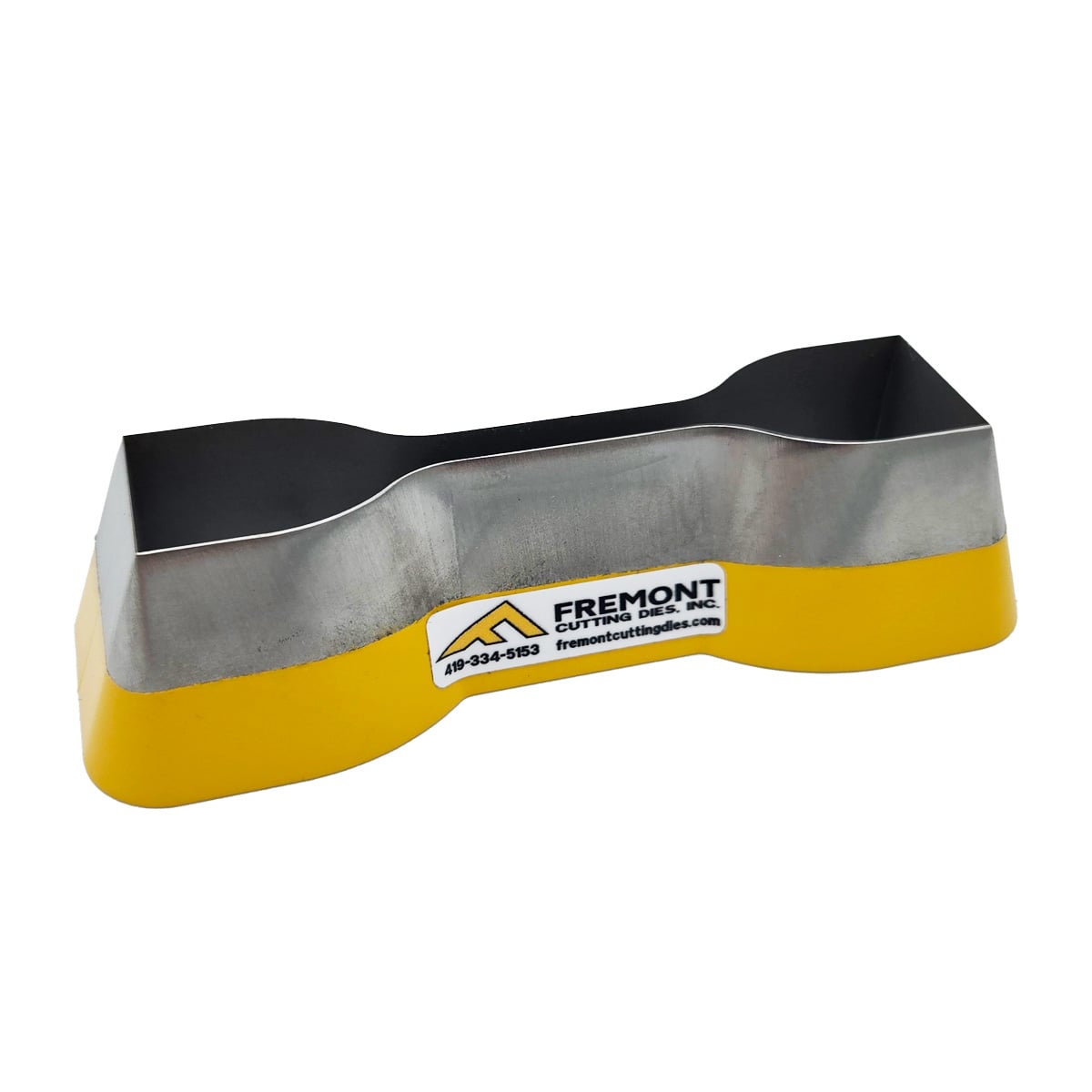
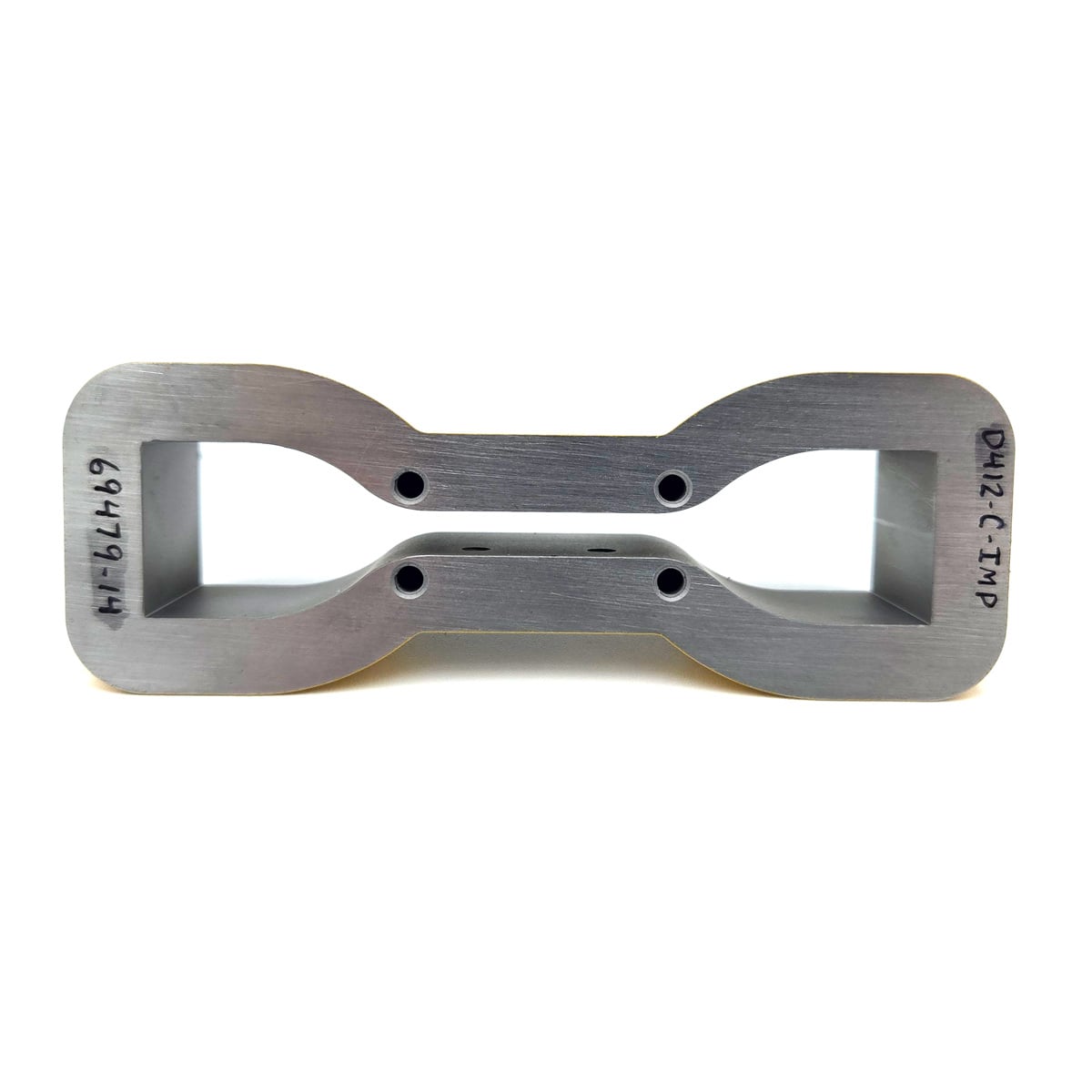
Before you can perform a dog bone tensile test, you need to cut the right specimen. That’s where precision dies come in. Using a high-quality specimen die ensures your samples meet the requirements of standards like ASTM D638 or ASTM D412. When choosing a dog bone die, consider:
Material Type
Different standards apply for rubber (D412) vs. plastics (D638)
Testing Standard
ASTM D412, D638, D1708, etc.
Cutting Method
Hydraulic presses, clicker presses, or manual cutters
Die Certification
Your die should have the tolerance required for consistency across samples
Why Fremont Cutting Dies?
At Fremont Cutting Dies, we manufacture a range of ASTM and ISO testing dies. Whether you’re working with rubber, thermoplastics, or composites, we have the die you need. Commonly used dies are in stock and ready to ship quickly. If you need something unique, our experienced team can create a custom die. We also offer:
Final Thoughts
The dog bone tensile test is a cornerstone of material evaluation in manufacturing. It provides clear, comparable data on how materials perform under tension. But behind every good test is a good specimen, and behind every good specimen is a high-quality die.
We’re proud to support manufacturers, labs, and engineers with the tools they need to test smarter and work better. Have questions about what die is right for your application? Contact us today to speak with our team.
